Coffee Bean Flavouring in the UAE: The Profiles Driving Orders in 2026
The UAE coffee market exceeded AED 12 billion in 2024, and it is growing at 8.4% annually through 2029. Cafés and restaurants account for 93% of that spending, one of the highest out-of-home shares in the world. And for the last eighteen months, one specific product category has been driving inbound enquiries at FlavourShop.ae: flavoured coffee beans.
This is not a niche request. UAE coffee roasters, food manufacturers, and café groups are actively developing flavoured bean products to differentiate on shelf and on menu. The market for it already exists. Supermarkets across Dubai and Abu Dhabi carry flavoured coffee from international brands. The demand is there for a local or bespoke offer.
The profiles below are not trend predictions. They are direct customer insight we have received from orders on FlavourShop.ae. These are the flavours UAE operators have been specifically requesting.
THE MARKET SHIFT
Why Flavoured Coffee Beans Are Growing in the UAE Now
The UAE coffee market has changed structurally over the last decade. The number of local roasteries has doubled or tripled. Specialty coffee, single origin, micro-lot, elevated process, is now standard across the hospitality sector. World of Coffee Dubai's exhibition footprint grew from 5,000 m² in 2022 to over 20,000 m² in 2026.
That growth created a secondary problem: differentiation. When every café in Dubai carries a specialty Ethiopian, a washed Yemeni, and a natural Brazilian, the product itself stops being a differentiator. Flavoured coffee beans give roasters a way to build proprietary SKUs with margin.
The business logic is straightforward. A roaster sources green beans at commodity or near-commodity pricing, roasts them, adds a food-grade concentrated flavour post-roast, and creates a branded product that does not exist anywhere else. No new equipment. No new supplier relationships. The flavour does the differentiation work.
PROFILE ONE
Kinda Buenoo
The profile: hazelnut and chocolate, with a wafer note in the richer variant. Close to the flavour profile of a Kinder Bueno chocolate bar, a reference point that immediately communicates the product to the consumer without additional explanation.
Why it works for coffee: hazelnut and chocolate are classic coffee flavouring profiles with decades of commercial precedent globally. In the UAE, the Kinder Bueno reference lands with the under-35 audience that drives café spend. The two Kinda Buenoo variants allow operators to choose between a lighter, cleaner hazelnut note and a fuller, more confectionery-forward profile.
Products: Kinda Buenoo Flavour 1 (FLABCN24702) · Kinda Buenoo Flavour 2 (FLABCN24703)
Application: Oil-soluble. Post-roast dry bean application. Suitable for espresso, filter, and cold brew formats.
PROFILE TWO
Crème Brûlée
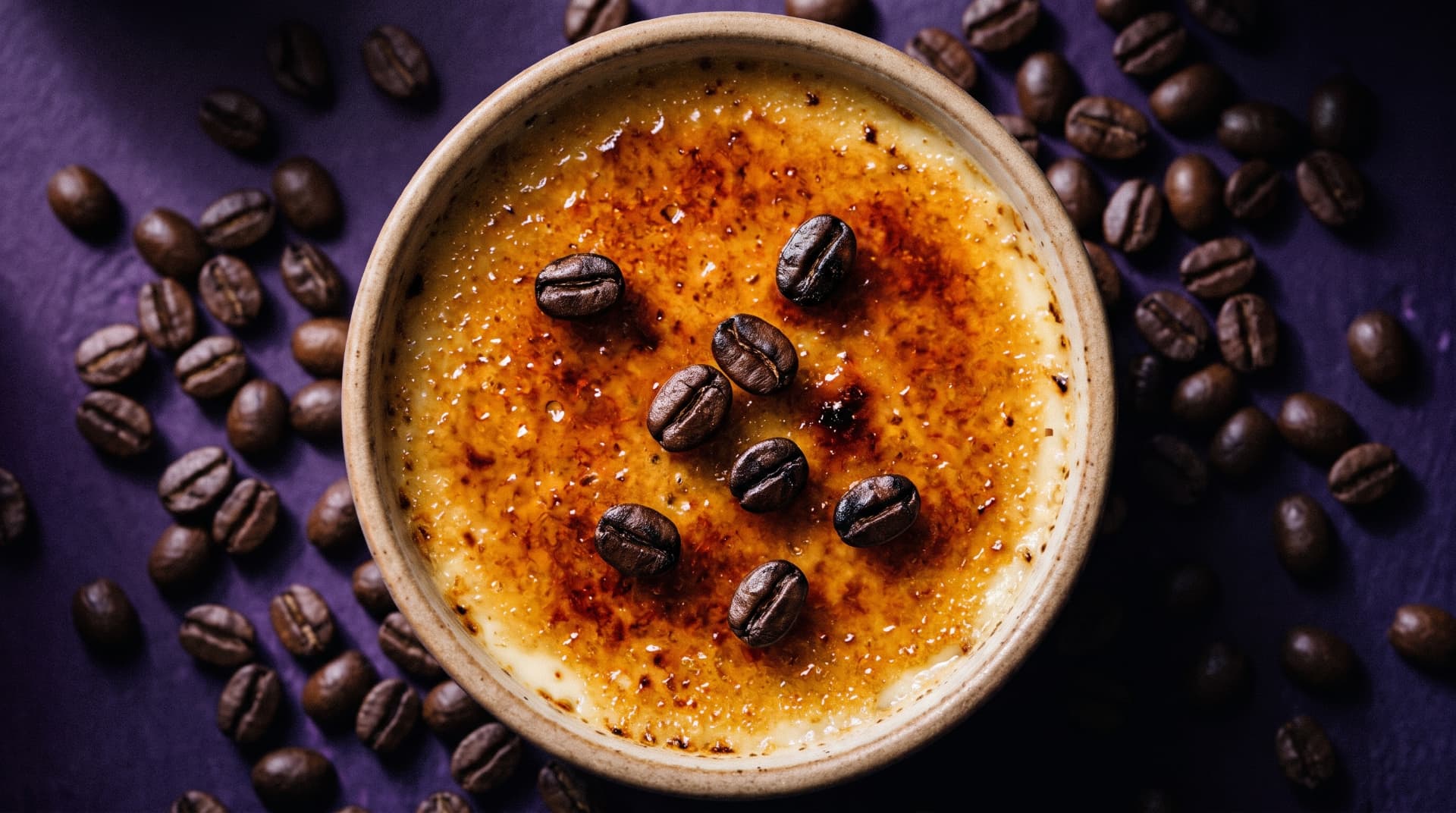
The profile: sweet vanilla custard with a caramelised sugar top note. The flavour of the dessert, not just vanilla.
Why it works for coffee: Crème Brûlée connects the coffee occasion directly to the dessert occasion, which is exactly where UAE café culture sits. Evening coffee with dessert is embedded in the market. Emirati and Arab consumer habits push café spend into the late evening hours around dessert. A Crème Brûlée coffee bean product fits that moment without asking the consumer to think about it.
The secondary reason is premiumness. Crème Brûlée reads as a hotel-quality dessert flavour. It carries a higher perceived value than a generic vanilla, which translates to margin on retail and menu pricing.
Products: Crème Brûlée Flavour 1 (FLABCN24700) · Crème Brûlée Flavour 2 (FLABCN24701)
Application: Oil-soluble. Post-roast dry bean application. Flavour 2 carries a deeper caramel note, suitable for darker roast profiles.
PROFILE THREE
Chocolate Coconut
The profile: dark chocolate with a clean, tropical coconut note. The two elements balance rather than compete. This is not a coconut-heavy profile with chocolate in the background.
Why it works for coffee: chocolate is the most natural flavour pairing with coffee globally. The chocolate-coconut combination is also closely associated with Bounty, the chocolate bar, which gives it an immediate consumer reference point in the same way Kinda Buenoo references Kinder Bueno. The coconut addition makes it specific rather than generic, giving operators a point of difference over plain chocolate. In the UAE, the combination also speaks to the South Asian consumer base. Coconut is embedded in Indian and Sri Lankan food culture, and there is a large community of coffee drinkers from those backgrounds across the Emirates.
It also fits the dessert-coffee crossover moment. Chocolate coconut has natural associations with premium confectionery formats that position the coffee product well in gifting and retail packaging.
Products: Chocolate Coconut Flavour (GFF 312036)
Application: Oil-soluble. Post-roast dry bean application. Works across roast levels. Performs well in dark roast formats where the chocolate note integrates naturally with roast character.
PROFILE FOUR
Bubblegum
The profile: sweet, fruity, slightly candy-forward. Associated with novelty confectionery rather than a specific fruit. The reference is the bubblegum itself.
Why it works for coffee: Bubblegum is the novelty pick. It drives social media content, works in seasonal or limited-run formats, and appeals specifically to the younger café consumer segment that is the highest-frequency buyer in UAE coffee shops. Light roast profiles carry it best. The sweetness and candy character come through cleanest on a light or medium roast, where the bean contributes fruitiness and brightness rather than roast bitterness.
This is not a year-round product for most operators. It is a rotating SKU that creates purchase occasions and content. That is valuable.
Products: Bubblegum Flavour I (GFF 312033) · Bubblegum Flavour II (GFF 312034)
Application: Oil-soluble. Post-roast dry bean application. Best suited to light or medium roast. Flavour I is lighter; Flavour II carries a fuller, more intense candy note.
PROFILE FIVE
Vanilla Cream
The profile: rich, creamy vanilla with a slightly floral note. This is a full, rounded vanilla, not a sharp extract. It reads as dessert, not as background flavour.
Why it works for coffee: vanilla is the most commercially proven coffee flavouring profile globally. It sells consistently across demographics, roast formats, and occasions without needing a marketing brief to explain it. The cream note in this specific formulation rounds out bitterness in espresso-based drinks and integrates cleanly across medium and dark roasts.
Of the 5 profiles in this guide, Vanilla Cream is the volume play. Where Bubblegum creates a moment and Kinda Buenoo speaks to a specific cultural reference, Vanilla Cream builds a consistent everyday SKU. For operators launching a flavoured coffee line for the first time, it is the lowest-risk starting point with the broadest consumer appeal across the UAE market.
Product: Vanilla Cream Flavour (GFF 312003)
Application: Oil-soluble. Post-roast dry bean application. Works across all roast levels. Suits espresso, filter, and batch brew formats.
APPLICATION PROCESS
How to Apply Flavours to Coffee Beans
For operators new to flavoured bean production, the application process is simple and requires no specialist equipment beyond a clean tumbling drum or mixing vessel.
Step 1: Time the application. Apply the flavour after roasting, once the beans have cooled to below 40°C. Hot beans off the roaster will cause volatile flavour compounds to flash off before they bind to the bean. Wait until warm, not hot.
Step 2: Measure the dosage. As a starting point, use 10 to 15 mL of flavour per 1 kg of coffee beans, adjusting based on roast intensity and desired flavour strength. Do not exceed 28 to 30 mL per kg. Refer to the Technical Data Sheet (TDS) on each product page for the specific recommended dosage. Order a sample first and test at a small batch level before committing to production quantities.
Step 3: Coat evenly. Add the flavour directly to the beans in the drum or vessel. Tumble for 5 to 10 minutes until the flavour is evenly distributed and the beans appear uniformly coated. Oil-soluble flavours spread across the bean surface without clumping.
Step 4: Rest before packaging. Allow flavoured beans to rest for 24 to 48 hours before final packaging. This resting period lets the flavour bind and mature, reducing any raw top note present immediately after application.
Halal note: All flavours on FlavourShop.ae are sourced from Halal-certified suppliers. The TDS for every product is available before you order, confirming the carrier solvent and certification status.
ORDERING
Ordering Flavours for Coffee Bean Applications
FlavourShop.ae carries all products listed in this guide with no minimum order commitment on samples. Samples ship from 20ml, allowing operators to run small batch trials before committing to production quantities.
Register on FlavourShop.ae to access the full catalogue, request samples, and order direct.
RELATED GUIDES
Order these 5 profiles and 35+ oil-soluble flavours in the catalogue. Samples from 20ml, no minimum commitment.
Register & Order Now